PHOTO GUIDE
Greece Schengen Visa Photo Requirements (Type C)
Photo requirements for a Greece short-stay Schengen visa (Type C): the photo size, background, and face-position conditions to meet for the application. The head fills the required share of the photo (minimum 300 ppi), with the width at 35 mm, a plain light background, and a photo no more than 6 months old.
Checked: 2026-07-13
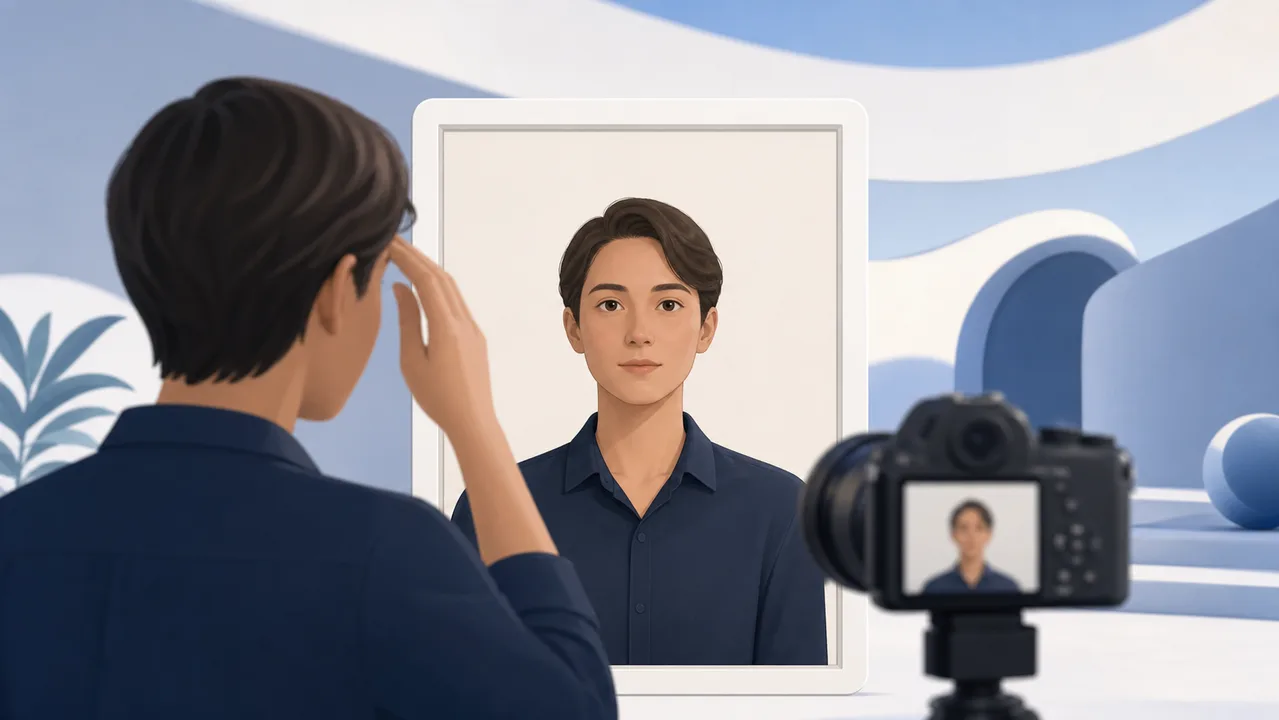
Key photo requirements
- Print size: 35 mm wide × 45 mm high. The ICAO MRTD Photo Guidelines that Greece applies as a Schengen member specify 35 mm in width, and the Greece MFA-hosted Schengen Visa Code Annex VII sets the image of the head at 70–80% of the vertical length of the photograph. Neither Greek official source states a face-height range in millimetres — sizing is ratio-based, and the standard Schengen print is 45 mm high.
- Age of photo: no more than 6 months old and matching your current appearance. The 6-month figure comes from the ICAO MRTD Photo Guidelines; some individual Greek missions state a stricter 3-month limit, which is a mission-level application of the global rule rather than the Greece-level standard.
- Background and pose: a plain, light-coloured, unpatterned background with no shadows (the ICAO wording); look straight at the camera with a neutral expression, mouth closed, eyes open and visible. Several Greek missions ask for white, but white is a mission-level requirement — at the global level a plain light tone is the baseline.
- Glasses and head covering: eyes fully visible with no tinted, reflective, or sunglasses-style lenses and no frames covering the eyes; head covering allowed only for religious reasons with the full face from chin to forehead still clear.
- Copies and submission: the number of prints and the submission route depend on the office that accepts your application. Confirm the count and the live checklist on the official Greek mission page for your country of residence before you book or print.
Photo size and shooting rules
These are the photo rules for a Greece short-stay Schengen visa (Type C) — the visa for short stays of up to 90 days within a 180-day period. National visas (Type D) for longer stays, residence, work, or study follow a different document list on the Hellenic Republic Ministry of Foreign Affairs portal and are not covered here.
The ICAO MRTD Photo Guidelines that Greece applies as a Schengen member specify 35 mm in width with the required face proportion, a plain light-coloured background, colour with natural skin tones, sharp focus, photo-quality paper, and no more than 6 months old. The Greece MFA-hosted Schengen Visa Code Annex VII (annex_20_en.pdf) sets the same 70–80% head ratio and a minimum resolution of 300 ppi uncompressed as the Greece-adopted technical standard for the photograph integrated in the Schengen visa sticker. Neither Greek official source states a face-height figure in millimetres; sizing is ratio-based, and the standard Schengen print is 45 mm high. Use this conclusion when you print.
The number of prints and the exact submission steps are set by the office that accepts applications where you live. Confirm the live checklist on the official Greek mission page for your country of residence before you book or print.
- Recency: no more than 6 months old; must look like you today.
- Quality: colour, sharp focus, high quality, no creases or ink marks. Digital captures printed on photo-quality paper at high resolution.
- Background: plain light-coloured (a plain light grey can work if even). Avoid busy scenes and strong shadows on the face or behind the head.
- Lighting: even light, natural skin tones, appropriate brightness and contrast; no flash reflection on skin, no red-eye.
- Pose and expression: look straight at the camera; face square-on, not tilted; eyes open and not covered by hair; neutral expression, mouth closed; alone in the frame.
- Glasses: eyes fully visible; no tinted lenses; no flash reflection on the lenses; frames must not cover the eyes. Remove glasses if those conditions are hard to meet.
- Head covering: only for religious reasons, and the full face from chin to forehead and both edges of the face must still be clear.
- Editing: keep brightness and crop adjustments that do not change how you look. Avoid contour reshaping, eye or nose changes, and heavy beauty filters. The photo must remain realistic with natural skin tones.
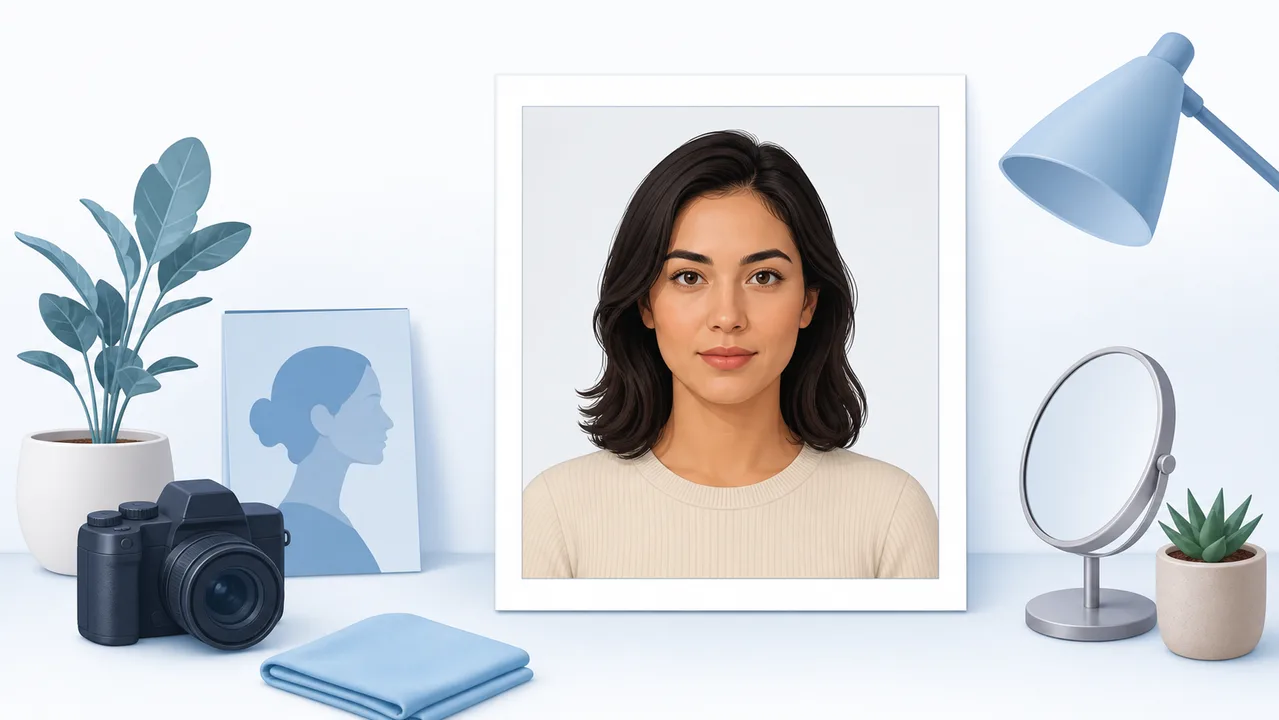
Photos for children
Children need a photograph that meets the same quality rules as adults: a recent photo, a plain light-coloured background, the child alone in the frame, eyes open and visible, a neutral expression with the mouth closed, and both edges of the face clearly shown.
Greece does not publish a Greece-specific age-banded child face-size table for Schengen visa photos (unlike some member states whose national ID-photo standard defines numeric age bands that the visa checklist incorporates). The Greece MFA visa pages reference the Schengen/ICAO standard, which does not publish numeric child face ranges either, so the reference basis for child photos here is the ICAO MRTD Photo Guidelines in general (no Greece-specific millimetre values). The Hellenic Police passport-photograph specification (passport.gov.gr) does allow smaller photo dimensions for children under 12 and babies, but that is a national-passport rule and no Greece MFA visa page we could verify incorporates it into the Schengen visa photo standard — do not transfer those numbers to the visa photo.
Fingerprint and live-photo capture rules for children (for example, that under-12s are exempt from fingerprint collection under the Visa Information System) are part of the application and biometrics process, not the photograph specification. The office that accepts your application can confirm the current biometric procedure for children.
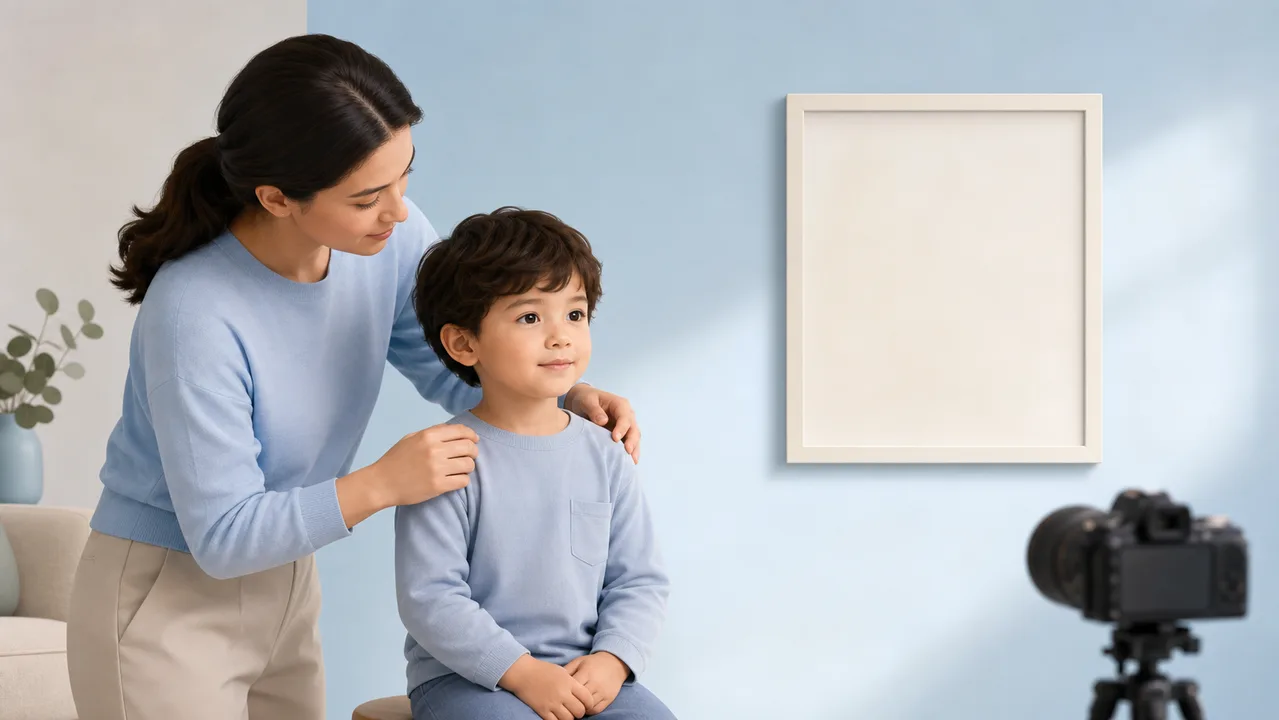
Common mistakes and how to fix them
These are the mistakes to avoid with a Greece visa photo, and how to fix them.
Greece-specific risks: using the Greek national-passport format (40×60 mm, face 31–35 mm) instead of the Schengen visa photo (35 mm wide, face 70–80%); a face under 70% or over 80% of the image; non-plain, dark, or patterned background; shadows on the face or behind the head; tinted or reflective glasses; head covering other than religious; tilted head or portrait-style framing; photo older than 6 months; low-resolution print under 300 ppi.
Watch for mission-level variants too: some Greek missions ask for a white background or a 3-month age limit that is stricter than the global ICAO baseline. If your accepting office publishes such a requirement, follow it — otherwise a plain light-coloured background and the 6-month age rule are the global standard.
- Head cut off or tilted: retake with more distance, face square-on to the camera, both edges of the face visible.
- Uneven colour, shadows, or blow-out on the background: use a plain light background and even light so the face and the back of the head stay free of hard shadows.
- Glasses glare: remove glasses if practical, or use clear lenses and lighting that shows the pupils fully.
- Old photo: replace any portrait older than six months or that no longer matches your appearance.
- Heavy beauty filters: start again from a natural image; do not change face shape or skin texture.
- Pixelated print: export a high-resolution colour file and print on photo-quality paper.
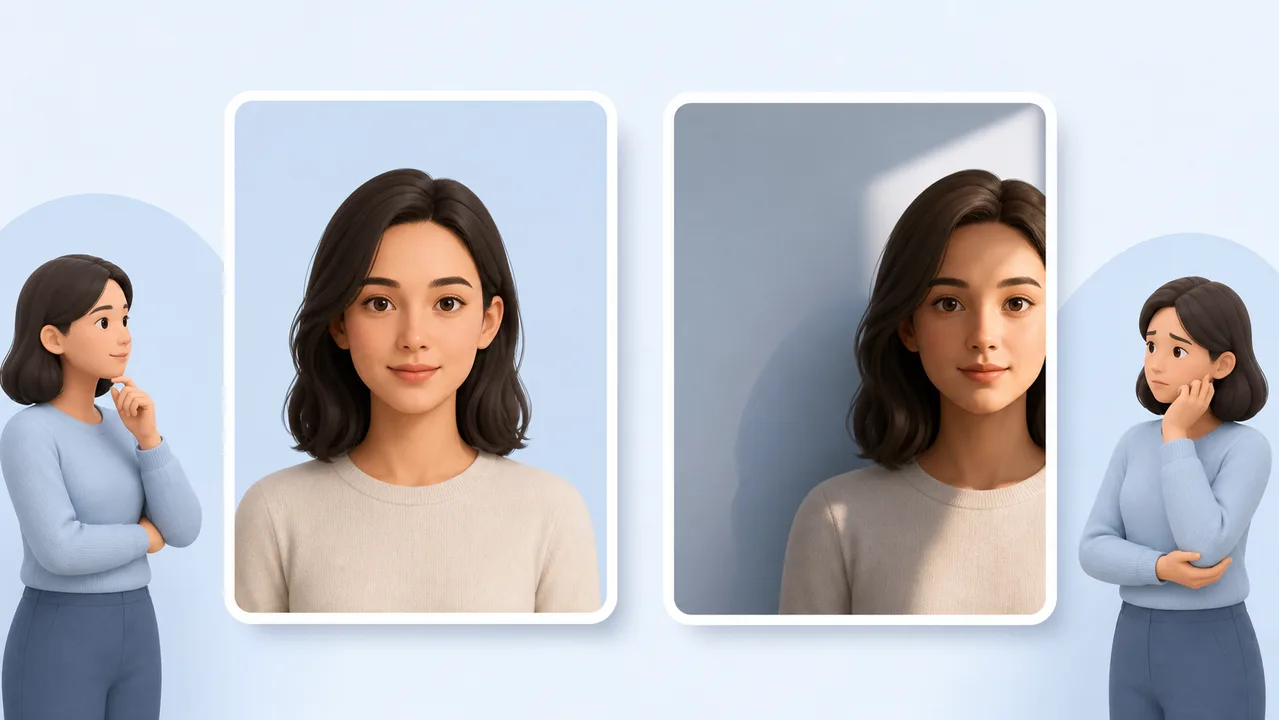
Create your Greece digital photo
Create a digital JPEG for your Greece visa application in your browser.
Create your photoWhat this tool creates
- the required face photo (for printing)
Also available as an iPhone appOpen the App Store
Check before you apply
Photo requirements can change. Before you submit, re-check the Greece MFA-hosted Schengen Visa Code Annex VII, the ICAO MRTD Photo Guidelines, and the checklist of the official Greek mission that will accept your application.
shoumei.org helps users prepare photo files based on publicly available requirements. It does not submit visa applications, and it is not an official government service, Schengen authority, embassy, consulate, VFS Global, TLScontact, or BLS International service. Please verify the latest requirements with the official embassy, consulate, or visa application center before submitting.
Frequently Asked Questions
What size is a Greece Schengen visa photo?
The ICAO MRTD Photo Guidelines that Greece applies as a Schengen member specify 35 mm in width with the face at 70–80% of the photograph, and the Greece MFA-hosted Schengen Visa Code Annex VII sets the same 70–80% head ratio with a minimum 300 ppi resolution. Neither Greek official source states a face-height figure in millimetres; the standard Schengen print is 45 mm high. This service prepares a print within that range. Confirm the live checklist of the office that accepts your application before you submit.
Can I reuse a photo from another application?
Only if it already meets every rule: 35 mm width, the required face proportion, a plain light-coloured background, taken within 6 months, matching your current appearance, and with no tinted or reflective glasses. Matching the outer size alone is not enough, and the photo must still look like you today.
What background colour is required?
The ICAO MRTD Photo Guidelines require a plain, light-coloured, unpatterned background that contrasts with the face and hair, with no shadows. White is not mandated at the global level; several Greek missions ask for white, so white is the safest practical choice, but a plain light tone is the global baseline. Check your accepting mission's checklist for any stricter local requirement.
May I wear glasses?
Only if the eyes are fully visible with no flash reflection on the lenses, no tinted lenses, and no frames covering the eyes. Otherwise remove the glasses for the photo. Sunglasses-style lenses are not allowed.
Can I take the photo with a smartphone?
Neither the Greece MFA-hosted Annex VII nor the ICAO MRTD Photo Guidelines names a required camera. If you use a smartphone, the final print must still meet every rule: 35 mm width, the required face proportion, sharp focus, even lighting, a plain light-coloured background, and at least 300 ppi when printed on photo-quality paper.
Do the same rules apply to children?
Yes for photo quality. Greece does not publish a Greece-specific age-banded child face-size range for Schengen visa photos, so the ICAO MRTD Photo Guidelines are the reference (no numeric child face ranges). Do not apply the smaller-child dimensions from the Greek national-passport specification (passport.gov.gr) — that is a 40×60 mm national-passport rule, not a visa-photo rule. Fingerprint exemptions for under-12s are part of the application process, not the photo specification.
Is the Greek passport photo the same as the Schengen visa photo?
No. The Greek national passport photograph is a different format — about 40×60 mm with the face 31–35 mm chin-to-crown and 20–25 mm ear-to-ear (passport.gov.gr / Hellenic Police). The Schengen visa photo is 35 mm wide, framed to the proportion described above. Do not submit a national-passport-format photo for a Schengen visa application.
Official and submission sources
- Hellenic Republic, Ministry of Foreign Affairs(mfa.gr)— Schengen Visa Code Annex VII Checked: 2026-07-13
- European Commission — ICAO MRTD Photo Guidelines Checked: 2026-07-13
- European Commission — Migration and Home Affairs: Applying for a Schengen visa Checked: 2026-07-13
- Hellenic Police — Technical Specifications of Passport Photograph(passport.gov.gr) Checked: 2026-07-13