Japan eVISA file preparation
Japan eVISA photo requirements
The Japan eVISA photo requirements: a recent, clear, front-facing digital face photo on a plain background, and the checks to complete before you upload.
Checked: 2026-10-04
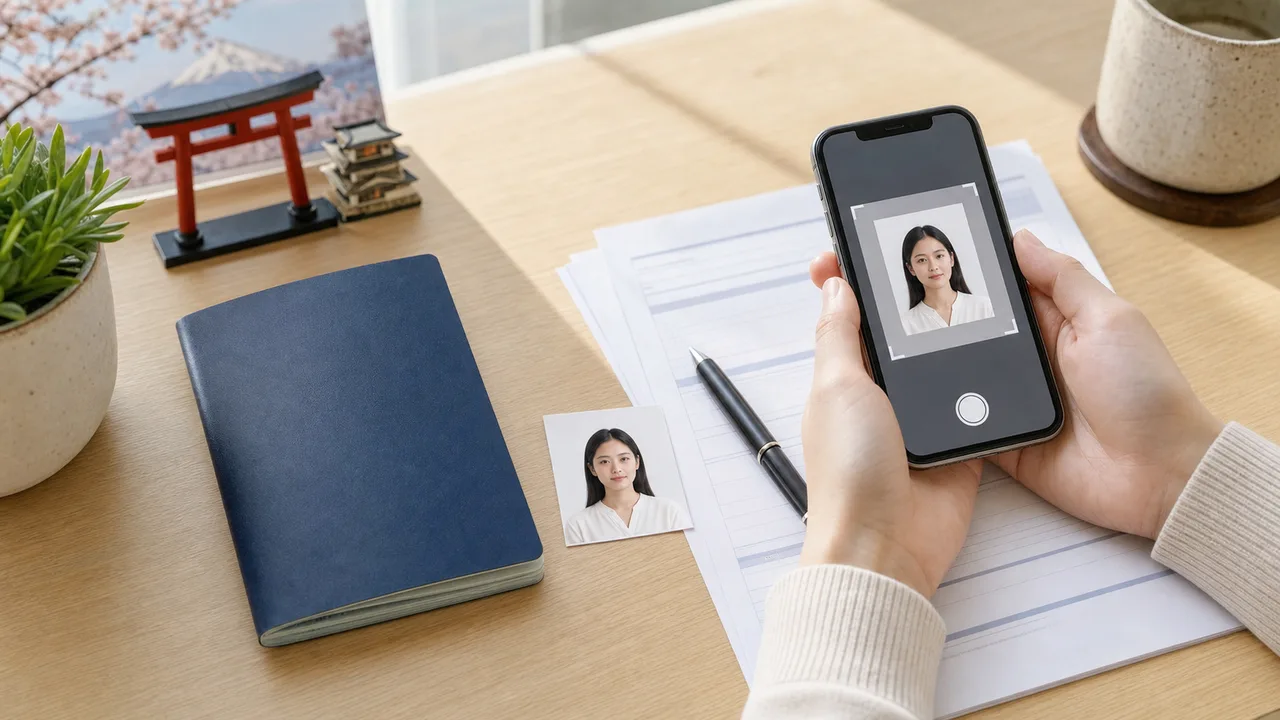
Quick summary
- All three application routes specify a digital face photo taken within the last 6 months — follow the instructions for your own route.
- Face the camera directly with a plain white or blank background.
- Do not use apps or retouching that change your face or background unnaturally.
- Do not photograph a printed photo and upload that image.
- Confirm your actual route because paper visa photo sizes can differ from online eVISA use.
Start with a real digital photo
A common mistake is to take a picture of a printed ID photo and upload it. The eVISA checklist explicitly warns against using a photo of a photo. Use the original camera capture and export a clean JPEG instead.
The app is designed to help frame a Japan visa-style 35 × 45 digital output, but the official upload screen and the instructions for your application remain the final authority.
Keep the face natural and identifiable
- Gaze
- Look straight at the camera.
- Eyes
- Keep both eyes visible and your mouth closed.
- Glasses
- Remove glasses if they cause glare or cover the eyes.
- Hair
- Keep hair away from the eyes and face outline.
- Editing
- Avoid beauty filters, AI face changes, skin smoothing, or background replacement that changes the appearance.
Do not mix eVISA and paper visa rules
Some Japanese embassies and consulates publish paper-application photo sizes such as 35 × 45.
Those sizes apply to printed paper-application photos, not to the online eVISA upload. For eVISA, follow the conditions shown on the upload screen and in the instructions for your application.
If your export is sized for paper, prepare a new eVISA-style file instead of reusing it for the upload.
Provider route photo requirements (verified route values)
These are route-specific values published by the named provider or official guide. They are not one global JAPAN eVISA photo specification. Follow the instructions for your own application route.
The official eVISA pixel dimensions are not published (Official pixel size not published).
- Singapore VFS Global route
- Size: 35 × 45 mm; formats: JPG / PNG / GIF / BMP / HEIC; maximum file size: ≤2 MB; photo age: within 6 months; white background; front-facing, neutral expression, no glasses; no filters and no reuse of an earlier ID photo.
- Hong Kong / Macau — CGJ Hong Kong guide, via VFS hkg
- Size: 35 × 45 mm; color photo; taken within the last 6 months; background color not specified in the official guide; front-facing, no hat.
- Mongolia VFS Global route
- Size: 35 × 45 mm; color photo; taken within the last 6 months; white background; front-facing, no hat or eyeglasses; face occupancy about 60%.
Create your photo in the browser
Prepare the photo for Japan e-Visa directly in your smartphone or computer browser. Creating and reviewing are free.
The photo specification this tool creates depends on your destination country and application route. Select your route in the tool.
Open the web toolAlso available as an iPhone appOpen the App Store
Based on official sources
These preparation steps are based on public information from Japan MOFA and Japanese diplomatic missions about JAPAN eVISA eligibility, online application scope, photo quality, and passport image preparation. The app prepares photo files; the visa application itself is submitted through the official route.
Upload mistakes that can cause problems
The following upload mistakes can cause a Japan eVISA photo or passport image to be returned. Avoid them before you submit, and confirm the latest official instructions for your route.
-
Uploading a photo of a printed photo
Photographing a printed ID photo adds paper texture, glare, and blur. Use the original digital capture and export a clean JPEG.
-
Unreadable passport data page
Glare, blur, cropped edges, or a hidden MRZ can stop the application. Keep the page flat and re-shoot under even light.
-
Copying paper visa sizes online
Some embassies list 35 × 45 for paper applications. Do not assume the same size applies to the online eVISA upload.
-
Beauty filters and AI retouching
Face-slimming, skin smoothing, and background replacement change how you look and can make the photo unusable. Keep the image natural.
-
Background that is not plain
Shadows, patterns, or a background that blends with light clothing fail the plain or white background check.
-
Files recompressed by chat apps
Sending the photo through a messaging app can destroy detail. Upload the original exported file, not a recompressed copy.
Why use the app to prepare files
Frame a 35 × 45 digital photo
The app helps you compose a Japan visa-style digital face photo with the right proportions, using your iPhone camera.
Export a clean JPEG
Get a clear file directly, without the recompression that messaging apps add, so facial detail and passport text stay sharp.
Check background and face position
Preview the plain background, face angle, and framing before you upload to the official system.
Independent preparation tool
The app only prepares image files. You still submit through the official JAPAN eVISA route and follow their instructions.
shoumei.org is an independent file preparation tool and is not affiliated with the Government of Japan, MOFA, embassies, or consulates. Preparing a photo with the app does not guarantee photo acceptance, application approval, or visa issuance.
FAQ
Can I use an old passport photo?
Use a recent photo. Each application route specifies a photo taken within the last 6 months. Follow the instructions for your own route.
Can the app guarantee that my eVISA photo will be accepted?
No. The app prepares a photo file, but the official system and reviewing authority decide whether the application and photo are accepted.
Is a white background required?
The Singapore route specifies white background, and the Mongolia route specifies white background; the Hong Kong/Macau guide says background color not specified in the official guide. Follow the guidance for your own application route.
Can I wear glasses in the photo?
The Singapore route specifies no glasses, and the Mongolia route specifies no glasses. If you normally wear glasses, check the checklist for your own application route before preparing the file.
Official sources
- MOFA - JAPAN eVISA system Checked: 2026-09-30
- MOFA - FAQ about JAPAN eVISA Checked: 2026-07-02
- Consulate-General of Japan in Los Angeles - eVISA requirements checklist Checked: 2026-07-02
- VFS Global — Japan eVISA (Singapore official provider route) Checked: 2026-07-28
- Consulate-General of Japan in Hong Kong — eVISA guideline (April 2026 eVISA/ENG_202604) Checked: 2026-08-27
- VFS Global — Japan eVISA (Mongolia official provider route) Checked: 2026-07-28